7 days, 6 nights
Ltc5.0(12)
6 Nights 7 Days Andaman LTC Tour Package – Port Blair, Havelock & Neil Island
Port BlairHavelockNeil Island
- Explore Port Blair, Havelock Island and Neil Island
Price on request
Explore the best places for underwater photography in Andaman with top dive sites, snorkelling spots, and marine life. Plan your trip with Andaman Bliss.
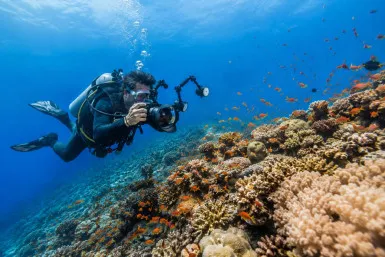
What makes the marine life in the Andaman so special? The warm waters around these islands are home to hundreds of different fish species, sea turtles, manta rays, and even sharks! The coral reefs here are healthy and colourful, creating perfect backgrounds for your underwater photos. Whether you're into scuba diving in Andaman or prefer snorkelling in Andaman, you'll find incredible photo opportunities.
This guide is for everyone who loves adventure and wants to capture the underwater beauty of Andaman. It doesn't matter if you're a beginner with a waterproof phone case or an expert photographer with fancy cameras – this article will help you find the perfect spots and give you tips to take amazing underwater photos.
Havelock Island diving offers some of the most spectacular underwater photography opportunities in India. The island has multiple dive sites perfect for photographers of all levels.
Read More: https://andamanbliss.com/islands/havelock-swaraj-dweep/elephant-beach
Neil Island snorkelling spots are perfect for those who want great photos without going too deep.
Read More: https://andamanbliss.com/islands/neil-shaheed-dweep/bharatpur-beach
Read More: https://andamanbliss.com/islands/neil-shaheed-dweep/laxmanpur-beach
North Bay underwater photography is popular because it's close to Port Blair and offers easy access to beautiful reefs.
| Location | Best Activity | Visibility | Marine Life | Difficulty | Best Months |
|---|---|---|---|---|---|
| Elephant Beach | Snorkeling | 10-15m | Clownfish, Corals | Beginner | Oct-May |
| The Wall | Scuba Diving | 15-25m | Eagle Rays, Groupers | Advanced | Nov-Apr |
| North Bay | Sea Walking | 8-12m | Reef Fish, Corals | Beginner | Oct-Mar |
| Bharatpur Beach | Snorkeling | 5-10m | Small Fish, Corals | Beginner | Nov-May |
| Dixon's Pinnacle | Scuba Diving | 20-30m | Manta Rays, Sharks | Advanced | Dec-Apr |
| Lighthouse | Scuba Diving | 15-20m | Turtles, Barracudas | Intermediate | Nov-Mar |
The ideal time for underwater photography in Andaman is from October to May. Here's why:
April to May
Cons:
Cons:
For Intermediate Photographers
Using a GoPro for underwater photography for beginners is perfect! Here are some tips:
Your safety comes first! Follow these rules:
During Photography
After Diving
Being a responsible underwater photographer means:
Behavioral Mistakes
Where to Stay
What to Pack
Yes, basic swimming skills are required for snorkelling and scuba diving. However, you can try sea walking at North Bay without swimming skills, though photo opportunities are limited. For best results, learn basic swimming before your trip.
Snorkelling trips cost ₹1,000-3,000 per person, scuba diving ranges from ₹3,500-6,000 per dive, and sea walking costs around ₹3,500. Professional photography services or equipment rental adds ₹2,000-5,000. Andaman Bliss offers package deals that include multiple activities.
Yes! Try Dive or Discover Scuba programs are perfect for beginners. You'll get basic training and dive with an instructor. Many dive centers offer underwater cameras for rent. Start with shallow dives at Elephant Beach.
Havelock offers more variety with both shallow and deep sites perfect for all levels. Neil Island is better for beginners and snorkelling photography. Serious photographers should visit both islands for diverse shots.
GoPro Hero 10/11 is excellent for beginners (₹30,000-40,000). Olympus TG-6 is great for intermediate users (₹35,000-45,000). For professionals, Sony A7R IV with Ikelite housing works best but costs over ₹3 lakhs.
Plan at least 5-7 days for a good underwater photography trip. Spend 3 days in Havelock, 2 days in Neil Island, and 1-2 days exploring Port Blair area sites. Andaman Bliss can customize itineraries based on your photography goals.
Not all beaches permit photography. Radhanagar Beach prohibits underwater activities. Always check local regulations. Protected areas like Mahatma Gandhi Marine National Park have restrictions. Stick to designated diving and snorkelling zones.
Andaman's endemic species include the Andaman Scorpion fish, local clownfish varieties, and unique coral formations. Dugongs (sea cows) are rare but possible to spot. The coral diversity here is among India's best.
Yes, with proper waterproof cases (rated for your diving depth). Many cases work up to 10-15 meters. Test the case in a pool first! Phone cameras work best for snorkelling in bright, shallow water.
Book 2-3 months ahead for peak season (December-March). Monsoon season (June-September) isn't ideal due to rough seas. Andaman Bliss offers early booking discounts and can arrange photography-focused guides for better experiences.
The underwater photography spots India has to offer don't get better than the Andaman Islands. With crystal-clear waters, vibrant coral reefs, and incredible marine diversity, these islands provide endless opportunities to capture the magic of the underwater world.
Whether you're drawn to the easy snorkelling at Elephant Beach, the thrilling dives at Dixon's Pinnacle, or the unique sea walking experience at North Bay, each location offers its own photographic treasures. Remember to respect the marine environment as you create your memories – the health of these Andaman coral reefs depends on responsible tourism.
Ready to explore the underwater wonders of Andaman? Andaman Bliss specializes in creating customized Andaman scuba tour packages for underwater photographers of all skill levels. From arranging the best dive masters who understand photography needs to booking accommodations near prime diving spots, they handle all the details so you can focus on capturing stunning images.
Contact us today to plan your underwater adventure in the Andaman Islands and turn your photography dreams into reality!
Co-founder & Director
Navin Kumar is part of the Andaman Bliss island team — Director.
40 articles by this authorReady-made Andaman itineraries that cover the places in this guide.
7 days, 6 nightsPort BlairHavelockNeil Island
Price on request
 5 days, 4 nights
Port BlairHavelockNeil Island
Price on request
 6 days, 5 nights
Port BlairHavelockNeil Island
Price on request
 4 days, 3 nights
Port BlairHavelock
Starting from
₹12,000
starting price, single occupancy