5 days, 4 nights
Ltc4.9(12)
4 Nights 5 Days Andaman LTC Tour Package
Port BlairHavelockNeil Island
- Explore the historic Cellular Jail and learn about its connection with India's freedom movement.
Price on request
Learn about the ancient tribes of Andaman and Nicobar Islands, including Sentinelese, Jarawa, Onge, and Nicobarese communities. Read their culture, lifestyle, and history with Andaman Bliss. Plan a responsible island journey today.
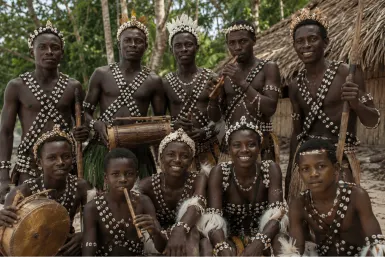
From the isolated Sentinelese tribe to the culturally rich Nicobarese community, the indigenous tribes of Andaman continue to fascinate anthropologists, historians, travellers, and researchers across the globe. These communities provide a rare glimpse into ancient human civilization, traditional ecological knowledge, and self-sustained living practices that have survived despite rapid modernization.
Many experts believe these tribal communities are descendants of some of the earliest humans who migrated out of Africa nearly 60,000 years ago. Even today, the major tribes of Andaman and Nicobar maintain unique customs, social systems, and hunting traditions that differ completely from the modern world. These communities also represent the different types of tribes in Andaman and Nicobar Islands, each preserving its own identity and cultural practices.
While some tribes have gradually interacted with outsiders, others continue to reject outside contact entirely. Their existence raises important questions about indigenous rights, cultural preservation, ethical tourism, and the balance between development and protection.
The list of tribes in the Andaman and Nicobar Islands includes both isolated hunter-gatherer communities and semi-modern tribal societies. Each tribe has its own language, traditions, food habits, and social structure.
| Tribe Name | Location | Population (Approx.) | Contact Status | Language Family |
|---|---|---|---|---|
| Sentinelese | North Sentinel Island | 50-150 | Uncontacted | Unknown |
| Jarawa | Western Andaman | 400-500 | Limited Contact | Andamanese |
| Great Andamanese | Strait Island | 50-60 | Mainstreamed | Mixed/Hindi |
| Onge | Little Andaman | 100-110 | Semi-nomadic | Ongan |
| Shompen | Great Nicobar | 200-250 | Semi-nomadic | Austro-Asiatic |
| Nicobarese | Nicobar Islands | 28,000+ | Mainstreamed | Austro-Asiatic |
The Sentinelese tribe is considered one of the most isolated human populations on Earth and is widely known among the Sentinelese tribes of Andaman and Nicobar Islands. Living on North Sentinel Island, this community has remained untouched by modern civilization for centuries. Unlike many other indigenous tribes in India, the Sentinelese have consistently resisted all attempts at outside contact.
The North Sentinel Island tribe survives through hunting, fishing, and gathering forest resources. They use handmade bows, arrows, and spears for protection and survival. Despite their isolation, the tribe has shown remarkable intelligence and adaptability over generations.
Their resistance to outsiders is often misunderstood. In reality, their isolation is closely connected to survival. Since the Sentinelese have no immunity to modern diseases like flu or measles, even limited contact could threaten their entire population.
The Indian government maintains a strict exclusion zone around the island to protect both the tribe and outsiders. Today, North Sentinel Island remains one of the few places on Earth where ancient human isolation still exists.
The Jarawa tribe is one of the most recognized primitive tribes of India and is often discussed among the Jarawa tribes of Andaman and Nicobar Islands. Traditionally living in the forests of South and Middle Andaman, the Jarawas remained isolated for decades before limited peaceful interactions began in the late 1990s.
The Jarawa people are skilled hunters, gatherers, and fishermen. Their deep understanding of forests, wildlife, and natural medicine highlights an advanced traditional knowledge system developed over generations.
Unlike modern societies, the Jarawa community follows a highly egalitarian social structure where decisions are often made collectively. They value cooperation, sharing, and community living over hierarchy.
The construction of the Andaman Trunk Road created major challenges for the Jarawa tribe, exposing them to outside influence, diseases, and tourism pressure. Today, several tribal protection policies focus on reducing unnecessary interaction and preserving the Jarawa cultural identity.
The Great Andamanese once represented the largest tribal population in the Andaman Islands. Historically, this group included multiple sub-tribes with distinct dialects and territories.
However, British colonization in the 19th century drastically changed their lives. Exposure to diseases, land displacement, violence, and dependency on external systems led to a severe population decline.
Today, the Great Andamanese population has reduced to fewer than 60 individuals, making them one of the most endangered tribal communities in India.
Their story reflects the long-term impact of colonization and uncontrolled cultural interference on isolated indigenous communities.
The Onge tribe is among the oldest surviving indigenous communities in the Andaman Islands and is an important part of the Onge tribe of Andaman and Nicobar Islands heritage. Primarily living in Little Andaman, the Onge people continue to maintain a semi-nomadic lifestyle deeply connected with forests and coastal ecosystems.
Traditionally, the Onge relied on hunting, fishing, turtle collection, and gathering edible forest products. Their survival skills and environmental knowledge have allowed them to adapt to changing climatic and ecological conditions for thousands of years.
The declining population of the Onge tribe remains a serious concern among anthropologists and tribal welfare organizations.
The Shompen tribe lives in the dense interior forests of Great Nicobar Island and is recognized as one of the most isolated communities among the Shompen tribe of Andaman and Nicobar Islands. Compared to other Andaman tribal communities, very little is publicly known about the Shompen because they maintain limited contact with outsiders.
The Shompen are semi-nomadic and survive through hunting, gathering, fishing, and shifting cultivation. Their lifestyle reflects strong adaptation to forest environments and tropical island ecosystems.
Researchers believe the Shompen tribe possesses valuable traditional ecological knowledge that could contribute to environmental and biodiversity studies.
The Nicobarese tribe is the most populous and socially integrated tribal group in the Andaman and Nicobar Islands. Unlike isolated communities such as the Sentinelese or Jarawa, the Nicobarese have adopted several modern systems while preserving their tribal identity and traditions.
The Nicobarese are known for their organized village settlements, community leadership systems, and strong cultural festivals. Coconut farming, pig rearing, fishing, and handicrafts form important parts of their economy.
The Nicobarese community represents a successful example of cultural adaptation without complete loss of traditional identity.
Many indigenous tribes of the Andaman continue to avoid interaction with modern civilization for several important reasons.
Major Reasons for Tribal Isolation:
For isolated tribes, outside contact can create long-term social, cultural, and health-related consequences. This is why tribal protection policies focus heavily on restricted access and minimal interference.
The Indian government has introduced multiple laws and protection programs to safeguard vulnerable tribal communities in the Andaman and Nicobar Islands.
| Protection Initiative | Purpose |
|---|---|
| Andaman and Nicobar Islands Protection of Aboriginal Tribes Act (1956) | Protect tribal territories and rights |
| Restricted Area Permits | Prevent unauthorized access |
| Buffer Zones | Reduce outsider interference |
| Tribal Healthcare Programs | Provide controlled medical support |
| Education Initiatives | Support willing communities |
| Coastal Surveillance | Protect isolated tribes like the Sentinelese |
These measures aim to balance tribal welfare, human rights, cultural preservation, and environmental conservation.
The Andaman tribal people's facts reveal extraordinary examples of human adaptability and survival.
These communities preserve ancient survival knowledge that modern societies are gradually losing.
Despite cultural differences, many tribes of the Andaman and Nicobar Islands share common survival practices centred around nature.
Their lifestyle reflects sustainability, minimal waste, and deep ecological awareness.
Modern development has created several challenges for the indigenous tribes of the Andaman and Nicobar Islands.
Protecting these communities requires ethical policies, responsible tourism, and respect for tribal autonomy.
The Sentinelese are considered the most "dangerous" only because they reject all outside contact. They're not inherently violent but protective of their isolation.
No, tourist contact with most tribes is strictly prohibited by law. Only researchers with special permits can study certain tribes under strict guidelines.
There are six major tribal groups: Sentinelese, Jarawa, Great Andamanese, Onge, Shompen, and Nicobarese.
Each tribe has its own language. The Great Andamanese languages are nearly extinct, while the Sentinelese language remains unknown. Jarawa and Onge speak their traditional languages.
No, this is a complete myth. None of the Andaman and Nicobar tribes practices cannibalism.
The Indian government prohibits visits to protect the Sentinelese tribe from diseases and preserve their chosen isolation.
They primarily eat fish, wild boar, honey, fruits, roots, and tubers. Coastal tribes rely more on marine resources.
Genetic studies suggest these tribes have lived in the islands for approximately 55,000-60,000 years.
No, they lack immunity to common diseases like flu or measles, which could wipe out their entire population.
Most primitive tribes are decreasing, except the Nicobarese, who are increasing. The Great Andamanese and the Onge face critical population levels.
The tribes of the Andaman and Nicobar Islands represent living links to humanity's ancient past. Their survival stories, unique cultures, and traditional knowledge systems offer invaluable insights into human adaptation and resilience. While respecting their privacy and choices, we must ensure these communities receive the protection and support they need to thrive on their own terms.
Understanding and respecting these indigenous communities enriches our knowledge of human diversity. Whether you're a student researching primitive tribes of India, a traveller curious about the islands, or someone interested in anthropology, remember that these tribes deserve our respect and protection, not intrusion.
For those planning to explore the accessible cultural aspects of the Andaman and Nicobar Islands while respecting tribal boundaries, Andaman Bliss offers responsible travel guidance that helps you experience the islands' permitted areas ethically. Contact us to plan your journey to these remarkable islands while contributing to conservation efforts and respecting indigenous rights.
Co-founder & Director
Navin Kumar is part of the Andaman Bliss island team — Director.
40 articles by this authorReady-made Andaman itineraries that cover the places in this guide.
5 days, 4 nightsPort BlairHavelockNeil Island
Price on request
 7 days, 6 nights
Port BlairHavelockNeil Island
Price on request
 6 days, 5 nights
Port BlairHavelockNeil Island
Price on request
 4 days, 3 nights
Port BlairHavelock
Starting from
₹12,000
starting price, single occupancy